Skip to: How Do Telescopes Work?
How Do Telescopes Work?
Telescope basics, reviews, accessories, and more!
Historical Review of Hubble Space Telescope
The history of one of the most famous telescope; the Hubble
Space Telescope dates back when in 1946, an astronomer called as Lyman
Spitzer wrote a very interesting paper with the title of Astronomical
advantages of an Extra-Terrestrial Observatory.
This paper defined the intention of developing Hubble space telescope. In that paper, Lyman Spitzer wrote about two main benefits of using a space observatory and compared it to the one that is ground-based.
The one main advantage defined in the paper written by Lyman Spitzer was that the angular resolution or the smallest distance/separation between two celestial objects can be limited if the observatory goes outside the earth’s atmosphere as it will face no atmospheric turbulence.
The second advantage of a space-based observatory over a ground-based observatory is that the space-based observatory can also make use of different lights that are not visible to ground telescopes e.g., ultraviolet lights, infrared lights etc.
These light rays can’t be gathered by ground-based telescopes because these light rays can’t enter the earth’s atmosphere.
After writing his paper in 1946, Spitzer spent much of his time in studying
and analyzing about the space-based telescope, its development and its
expected advantages over the ground-based telescopes.
Finally in 1962, National Academy of Sciences in United States made a recommendation of developing a very large space-based telescope.
After then in 1965, Spitzer became the head of the committee that was responsible for defining the goals and objectives for a space-based telescope. One of the hurdles in the building of Hubble-space telescope was delays and budgets.
The problem of budget was finally resolved in 1977 when the Congress voted the funding of this space-based telescope project after which the development of Hubble Space Telescope started.
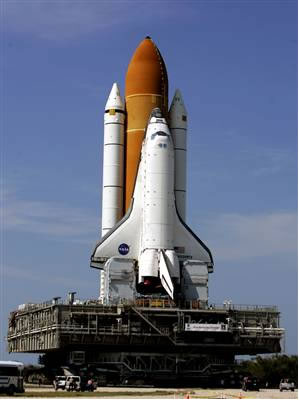
One of the worst hurdles in the history of Hubble Space Telescope was the explosion of the space shuttle in 1986. Hubble Space Telescope was scheduled to launch in October 1986 but the space shuttle exploded after its launch.
The disaster halted the whole space observatory program and it caused severe delay in the launch of Hubble Space Telescope. These were the two main hurdles in the launch of Hubble Space Telescope.
The next year, in 1988, different shuttle flights were resumed and in the same year the next date of the launch of Hubble Space Telescope was scheduled. The scheduled year was 1990.
Another relatively minor problem was to remove the dust that had been built up on the mirror of the Hubble Space Telescope after its delay. The dust was removed with the help of jets of nitrogen.
Before the final launch of the Hubble Space Telescope, extensive tested was conducted to ensure the success of its launch this time.
Finally, on 24th of April, 1990, Discovery; the space shuttle was launched into the space with Hubble Telescope. Since then, Hubble space telescope has been giving us vital information about the surroundings of our earth.
Another fact about Hubble space telescope is related with its name. The Hubble Space Telescope was named after Edwin Hubble. Edwin Hubble was the man behind the discovery of cosmos.
The history of the Hubble Space Telescope is full of hurdles but eventually followed by successes. It is a genuine fact that with the help of only ground-based telescopes, we would not know the amount of information we know today because of space-based Hubble Telescope.